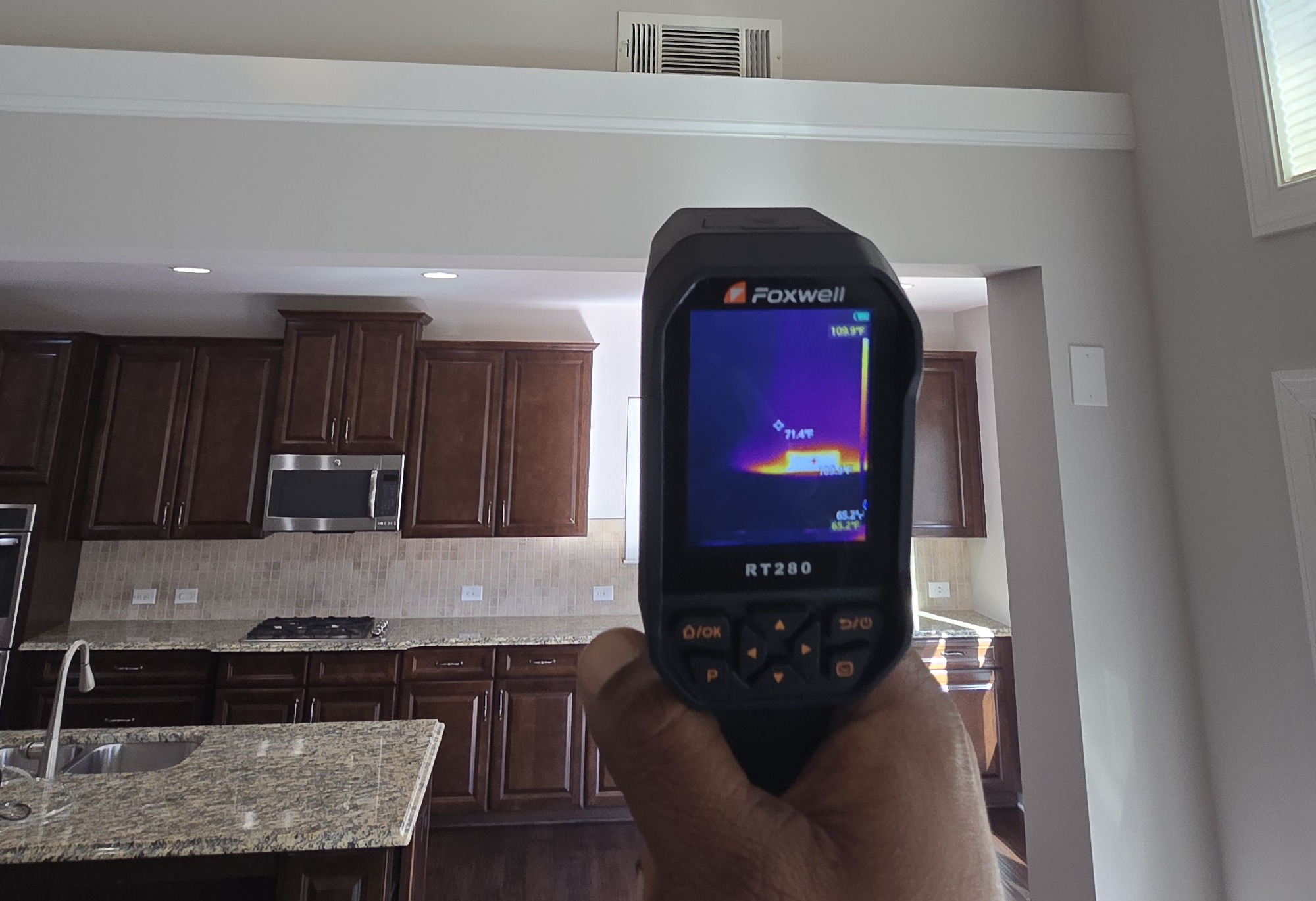
Thermal Camera Inspections
In the current house inspection process, thermal imaging has become an indispensable instrument that has completely changed the way homes are assessed for structural integrity, efficiency, and safety. Thermal imaging cameras pick up temperature differences by absorbing infrared radiation generated by objects. This allows them to identify hidden problems that the human eye might miss. With unmatched accuracy, home inspectors can now detect possible issues, including electrical malfunctions, inadequate insulation, and even pest infestations, thanks to this technology. As a non-invasive technique, thermal imaging speeds up the inspection process and improves the accuracy of home evaluations, enabling homeowners to make more informed decisions and guaranteeing the longevity and safety of their assets.
Identification of Hidden Mold and Moisture Spots
It is never pleasant to see mold growing around the house, and if it is neglected, it can soon become a health risk. However, dampness and mold typically appear in the house's darker corners, like laundry rooms and air ducts, where it often misses the eye. By using thermal technology, an inspector can search for potentially concealed mold patches throughout the house that are otherwise undetectable to the unaided eye. It is much simpler to address this issue once these places are identified.
Electrical System Examination
Thermal imaging in electrical systems aids in identifying components that are overheating, loose connections, and malfunctioning wiring. This reduces the need for lengthy repairs and puts out electrical fires.
Finding Heat Leaks
Find any heat leaks in structures or equipment to save a lot of money on heating and cooling expenses. Through the identification of heat-escaping regions, clients can take proactive measures to enhance energy efficiency by repairing insulation, sealing leaks, or replacing equipment.
Detection of Pests
Everyone detests the thought of having cockroaches and other unsavory little insects living inside of their house. Similar to moisture and mold, these different little pests and animals can all have their temperatures detected by an infrared image.